Quick Summary
| Venue | Asakusa Sumo Club, Asakusa, Taito-ku, Tokyo |
|---|
| Price Range* | Approx. $50–$90 per person (show + chankonabe) |
|---|
| Duration | ~1.5–2 hours |
|---|
| Show Format | Interactive sumo demonstrations + chankonabe meal |
|---|
| Advance Booking | Recommended — limited seating |
|---|
| Location | Walking distance from Senso-ji Temple and Asakusa Station |
|---|
| Child-Friendly | Yes — families welcome |
|---|
*Prices sourced from Klook and other booking platforms as of 2026.
What Makes Asakusa Sumo Club Special
Asakusa Sumo Club sits at the intersection of Tokyo's two biggest visitor magnets: sumo culture and the Asakusa temple district. The venue offers an interactive sumo experience that blends athletic demonstration, cultural education, and culinary tradition into a single 2-hour visit.
What separates this from other sumo shows in Tokyo is the chankonabe. While Yokozuna Tonkatsu serves tonkatsu (breaded pork cutlets), Asakusa Sumo Club serves the actual stew that sumo wrestlers eat daily as their primary source of nutrition. Chankonabe is not just any hot pot — it's a specific recipe developed over centuries to pack maximum calories and protein into a single pot.
The other differentiator is location. Being in Asakusa means you can fold this into a broader cultural day that includes Senso-ji Temple, Nakamise-dori shopping street, and the Sumida River waterfront — no need to travel to Ryogoku specifically.
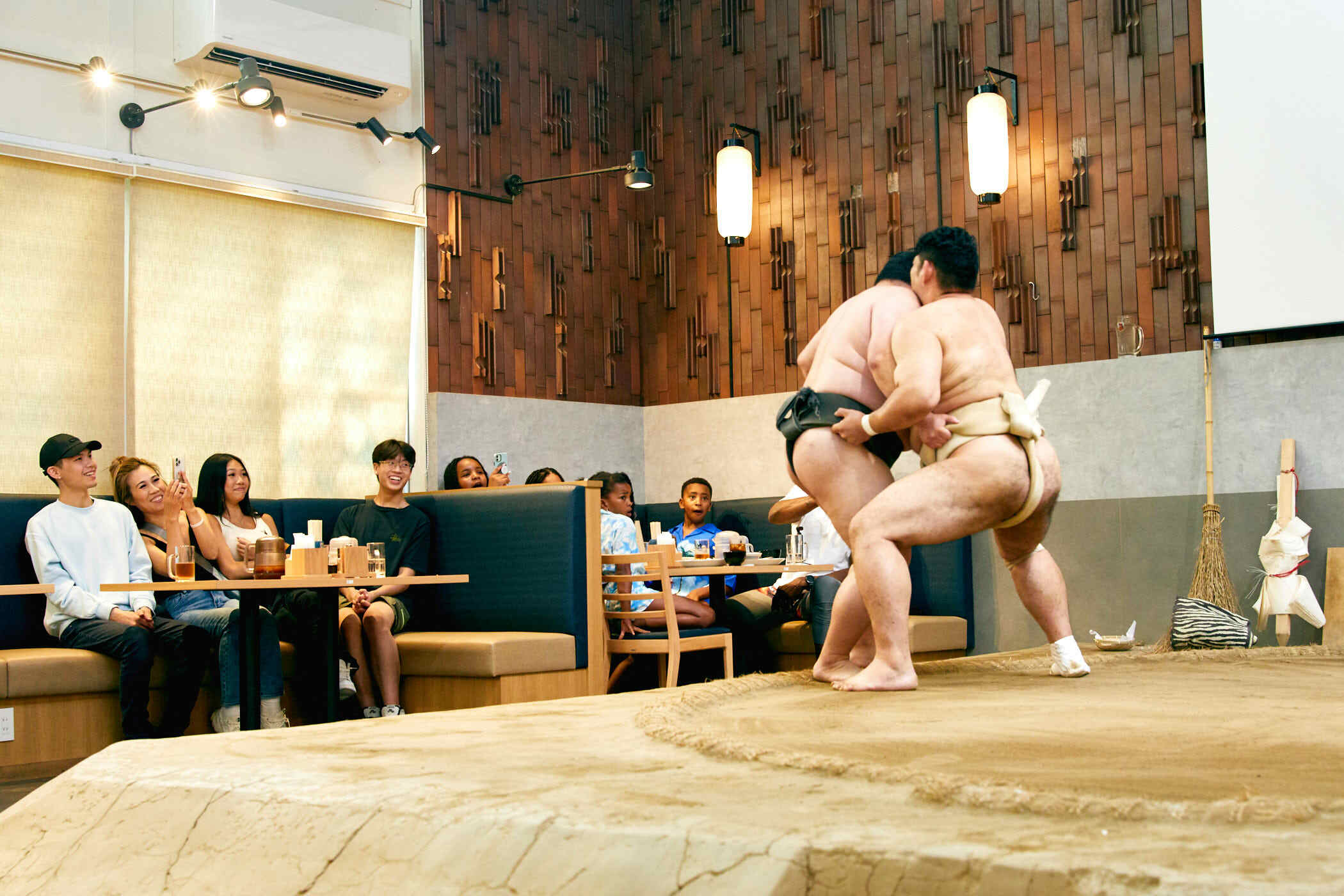
What to Expect: The Full Asakusa Sumo Club Experience
The Sumo Show
The show is structured to educate and entertain in equal measure:
- Introduction to sumo: A host explains the history, rules, and rituals of sumo in English and Japanese. Visual aids and live demonstrations make this accessible regardless of your background knowledge.
- Technique demonstrations: Wrestlers show the 82 officially recognized winning techniques (kimarite) — well, a curated selection of the most dramatic ones. You'll learn the difference between yorikiri (force-out), uwatenage (overarm throw), and hatakikomi (slap-down).
- Exhibition matches: Full-speed demonstration bouts between the performers. The impact is visceral at close range — two human beings each weighing over 100 kg colliding at speed produces a sound you'll feel in your chest.
- Audience challenge: This is what everyone remembers. Volunteers step into the dohyo and attempt to push a wrestler out of the ring. The wrestler goes easy on you (sort of), but the experience of grappling with someone who outweighs you by 50+ kg is humbling and hilarious in equal measure.
- Photo session: Wrestlers pose with guests after the show. Expect to feel very small standing next to them.
The Chankonabe Meal
Chankonabe at Asakusa Sumo Club follows the traditional recipe:
- Broth: Chicken-based (tori), which is traditional — chicken is considered lucky in sumo because chickens stand on two feet (wrestlers who touch the ground with anything other than their feet lose)
- Proteins: Chicken, tofu, fish cakes, and sometimes pork meatballs
- Vegetables: Chinese cabbage, carrots, mushrooms, leeks, and chrysanthemum greens
- Noodles/Rice: Udon noodles or rice are added toward the end to absorb the rich broth
The meal is communal — sharing a pot of chankonabe with your travel companions mirrors how wrestlers eat together in their stables. A single sumo wrestler consumes roughly 7,000–10,000 calories per day, with chankonabe as the nutritional backbone.
The chankonabe here is legitimately good — not a watered-down tourist version. The chicken broth has depth, and the vegetables are fresh. My tip: order an extra portion of rice to soak up the remaining broth at the end. It becomes a porridge (ojiya) that's arguably the best part of the meal.
— Editorial Team, SumoExperience.tokyo
Ticket Comparison: Show Only vs. Show + Chankonabe
| Feature |
Show Only |
Show + Chankonabe |
| Live sumo demonstrations |
✓ |
✓ |
| Audience participation |
✓ |
✓ |
| Chankonabe meal |
✗ |
✓ |
| Photo session |
✓ |
✓ |
| Duration |
~1 hour |
~1.5–2 hours |
| Price |
Lower |
Higher (includes meal) |
💡 Our Recommendation
Go for the chankonabe package. The price difference is modest compared to what you'd spend on a separate restaurant meal, and eating chankonabe in a sumo context — right after watching wrestlers compete — transforms it from "dinner" into "part of the experience." You'll never eat hot pot the same way again.
The "Secret" Entry: Insider Tips
Best Time Slots
- Lunch shows: Less crowded, often a slightly more relaxed atmosphere. Great if you're combining with a morning temple visit to Senso-ji.
- Evening shows: More energetic, especially on weekends. The crowd participation tends to be livelier after people have had a drink or two.
Combine with Asakusa Sightseeing
The location makes this the easiest sumo experience to fit into a typical Tokyo day. A suggested flow:
- Morning: Senso-ji Temple and Nakamise-dori (arrive by 9 a.m. for fewer crowds)
- Late morning: Walk to the Sumida River and take photos of Tokyo Skytree
- Lunch/Afternoon: Asakusa Sumo Club (show + chankonabe)
- Afternoon: Hop-on Sumida River cruise to Odaiba or walk to Akihabara (25 min)
How to Save on Asakusa Sumo Club Tickets
- Book on Klook: Klook regularly offers competitive pricing for this venue, sometimes with instant confirmation
- Weekday visits: Pricing may be lower on weekday sessions compared to weekend prime time
- Child discounts: Children's rates are typically available — check the booking platform for age cutoffs
- Combo tickets: Some platforms bundle Asakusa Sumo Club with other Asakusa attractions (rickshaw ride, tea ceremony) at a combined discount
Getting There
- Nearest stations: Asakusa Station (Tokyo Metro Ginza Line, Toei Asakusa Line, Tsukuba Express)
- From Shinjuku: Take the Tokyo Metro Marunouchi Line to Ginza, transfer to Ginza Line to Asakusa (~30 min)
- From Tokyo Station: Ginza Line from nearby Nihonbashi or Kanda (~15 min)
- From Ryogoku: Walk (~20 min along the river) or Toei Oedo Line to Kuramae + short walk
Asakusa Sumo Club vs. Other Sumo Experiences
If you're trying to choose between Asakusa Sumo Club and other options, here's the honest take:
- Choose Asakusa Sumo Club if: You want chankonabe specifically, you're already visiting Asakusa, you want the most "cultural" show format, or you're a first-time Japan visitor who wants to combine sumo with temple-district sightseeing.
- Choose Yokozuna Tonkatsu if: You prefer tonkatsu to hot pot, you want a slightly more entertainment-focused show, or you're exploring the Ryogoku district.
- Choose Morning Practice if: You want raw authenticity over entertainment, you're a sports fan, or you want to see real competitive training.
Frequently Asked Questions
Do I need to book Asakusa Sumo Club in advance?
Yes, advance booking is recommended. The venue has limited capacity and popular time slots sell out, especially during peak tourist seasons (March–April, October–November). Walk-ins may be possible on quieter weekdays, but don't count on it.
Is the chankonabe good for people with dietary restrictions?
Traditional chankonabe contains chicken, soy sauce (wheat), and various proteins. It's not inherently vegetarian, vegan, or gluten-free. Contact the venue in advance to discuss alternatives — some modifications may be possible.
How physical is the audience participation?
The wrestlers control the interaction carefully. You won't be thrown or hurt. Expect to push against someone immovable, be gently moved around the ring, and laugh a lot. No fitness level required — it's entertainment, not combat.
Can I bring my own drinks?
Drinks are typically available for purchase at the venue (beer, soft drinks, tea). Outside drinks policies vary — check with the venue or booking platform.