
Watch real sumo bouts, visit a training stable at dawn, eat chankonabe with wrestlers. Every way to experience sumo culture in Tokyo — curated by a Japan travel editor.
Browse Sumo Tickets & Tours ➔ⓘ Disclaimer This website (sumoexperience.tokyo) is an independent informational guide and is not affiliated with, endorsed by, or connected to any official sumo organization, venue, or ticket vendor. Prices and availability shown are sourced from third-party providers and may change. Always verify details on the official provider's website before booking.
Sumo is not a sport you simply watch. It is a 1,500-year-old ritual woven into Shinto ceremony, warrior etiquette, and the daily rhythms of Tokyo's Ryogoku district. The salt tossed before each bout is purification. The stomping (shiko) drives evil spirits from the earth. The topknot (chonmage) marks a wrestler's active career — when it is cut at the retirement ceremony (danpatsu-shiki), grown men weep.
For visitors, Tokyo offers the widest range of sumo experiences anywhere in Japan. You can score ringside seats at the Kokugikan, peer into a training stable at 6 a.m., eat the same protein-rich stew wrestlers consume daily, or step into a real dohyo (ring) yourself during an interactive show. This guide breaks down every option — with practical details on pricing, timing, and how to actually secure a spot.
I've attended over 40 sumo events across 8 years in Japan. The single best advice I can give: don't limit yourself to one type of experience. Watch morning practice to understand the discipline, attend a show for the spectacle, and sit down for chankonabe to taste what fuels a 150 kg athlete. Each layer deepens the others.
— Editorial Team, SumoExperience.tokyo| Experience | Price Range* | Duration | Advance Booking? |
|---|---|---|---|
| Yokozuna Tonkatsu Dosukoi Tanaka | ~$70–$110 | ~2 hours | Yes (sells out fast) |
| Morning Practice Tour | ~$40–$70 | ~2–3 hours | Essential |
| Asakusa Sumo Club Show | ~$50–$90 | ~1.5–2 hours | Recommended |
| Shinjuku Sumo Club | ~$55–$90 | ~1.5–2 hours | Recommended |
| Shibuya Sumo Show | ~$50–$85 | ~75–90 min | Recommended |
| Ryogoku Sumo Dinner | ~$80–$130 | ~2–2.5 hours | Essential |
| Grand Tournament (Tokyo) | ¥2,200–¥50,000+ | Full day | Critical |
| Sumo Restaurant & Lunch | ~$60–$100 | ~2 hours | Yes |
| Grand Tournament Tickets | ¥3,800–¥14,800+ | Full day | Critical (sells out in hours) |
*Prices sourced from third-party booking platforms (GetYourGuide, Klook) as of 2026. Check provider sites for current rates.
Before you book anything, a quick primer on what you're about to witness. Sumo (sumou, 相撲) is Japan's national sport and one of the oldest organized martial arts on Earth. The rules are deceptively simple: two wrestlers face off inside a circular clay ring measuring 4.55 meters in diameter. Force your opponent out of the ring or make any part of his body other than his feet touch the ground. That's it.
What elevates sumo beyond simple grappling is the ecosystem surrounding each bout:
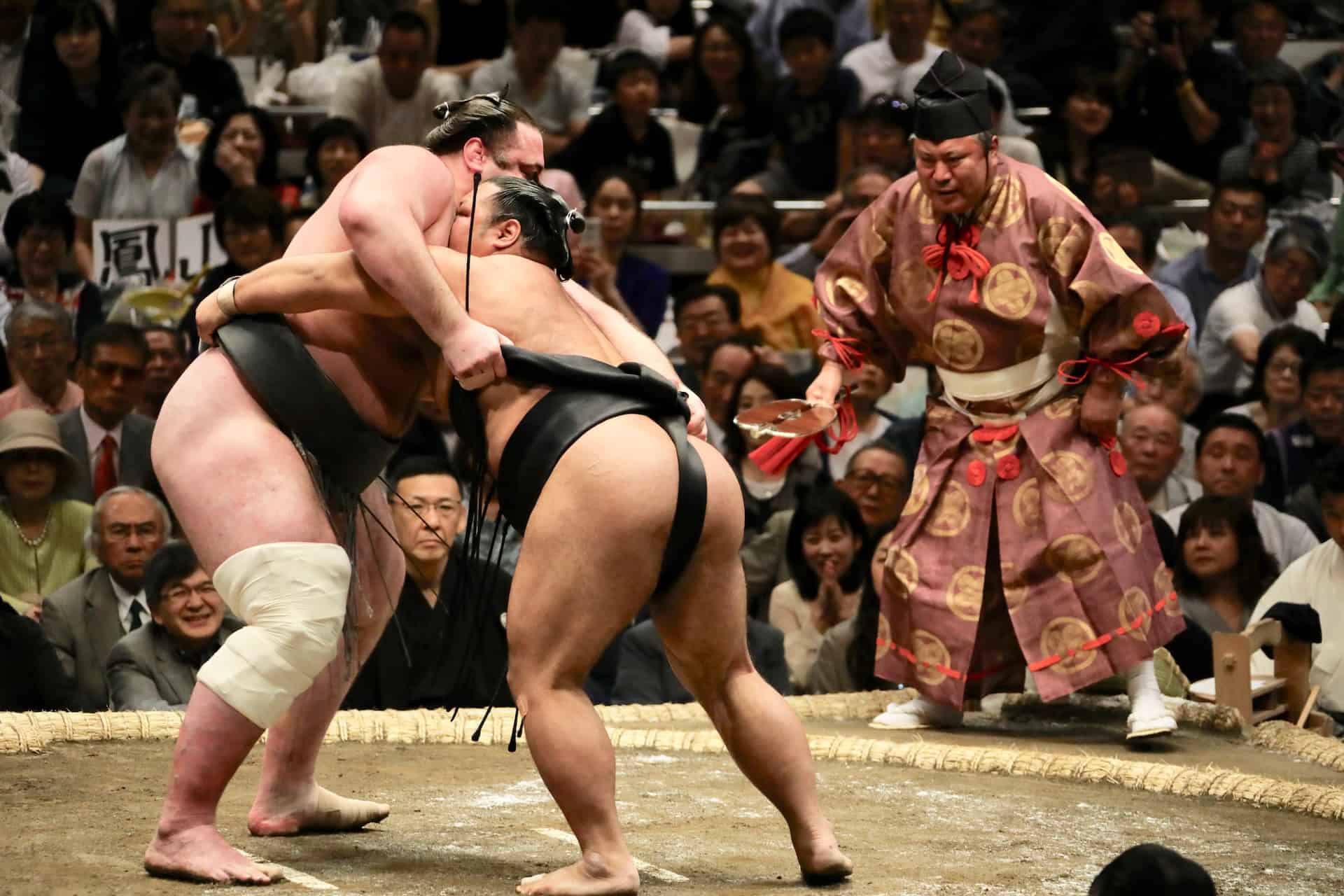
Japan hosts six 15-day tournaments per year. Three take place in Tokyo at the Ryogoku Kokugikan (January, May, September). The others are in Osaka (March), Nagoya (July), and Fukuoka (November). Each tournament runs from the second Sunday of the month through the fourth Sunday.
If your Tokyo trip doesn't align with tournament dates, don't worry. The experiences listed below are available year-round — and many visitors actually prefer them to the tournament itself, because you get closer to the wrestlers and the culture.
Not every experience suits every traveler. Here's a practical breakdown based on what you're actually looking for:
Yokozuna Tonkatsu Dosukoi Tanaka wins here. The show is designed for entertainment: wrestlers explain techniques, invite audience members into the ring, and the tonkatsu dinner keeps children happy. The venue is modern and comfortable, and shows typically run 2 hours — short enough for young attention spans.
Morning practice at a sumo stable is the most authentic experience available. You'll sit on the floor of a working training hall, close enough to feel the impact when two 130+ kg men collide. There's no commentary, no entertainment — just raw athleticism. The guided tour option adds context from a bilingual expert who can explain the drills, hierarchy, and strategy you're witnessing.
Asakusa Sumo Club combines several boxes in one visit: it's located in Asakusa (near Senso-ji temple, a must-see anyway), includes chankonabe (you'd want to try it regardless), and the interactive format means you'll actually understand what's happening. Pair it with an afternoon at Senso-ji and an evening stroll through Nakamise-dori for a perfectly packed day.
Sumo Restaurant & Lunch focuses on the culinary side. You'll learn why chankonabe isn't just "sumo stew" but a carefully calibrated nutrition strategy. Most experiences include a demonstration bout alongside the meal, so you're not sacrificing the spectacle — just putting the food first.
| Feature | Yokozuna Tonkatsu | Morning Practice | Asakusa Club | Sumo Restaurant |
|---|---|---|---|---|
| Live sumo bouts | ✓ | ✓ | ✓ | ✓ |
| Meal included | ✓ Tonkatsu | ✗ | ✓ Chankonabe | ✓ Chankonabe |
| Audience participation | ✓ | ✗ | ✓ | Limited |
| English commentary | ✓ | ✓ (guided) | ✓ | ✓ |
| Year-round availability | ✓ | Varies by stable | ✓ | ✓ |
| Kid-friendly | ✓ | Ages 12+ | ✓ | ✓ |
During the three Tokyo honbasho, the city buzzes with sumo energy. Wrestlers in full regalia walk through Ryogoku. The streets fill with food stalls. Morning practice sessions at stables intensify in the weeks leading up to the tournament but stop entirely during tournament days (wrestlers compete, not train).
Paradoxically, these months offer better access to wrestlers. Stables are more relaxed about visitors. Sumo show restaurants operate as normal. You lose the tournament atmosphere but gain proximity. For most visitors, this trade-off favors the off-months.
If sumo has a hometown, it's Ryogoku. This quiet district on the east bank of the Sumida River has been the center of professional sumo since the Edo period (1603–1868). Within a 10-minute walk of JR Ryogoku Station, you'll find:
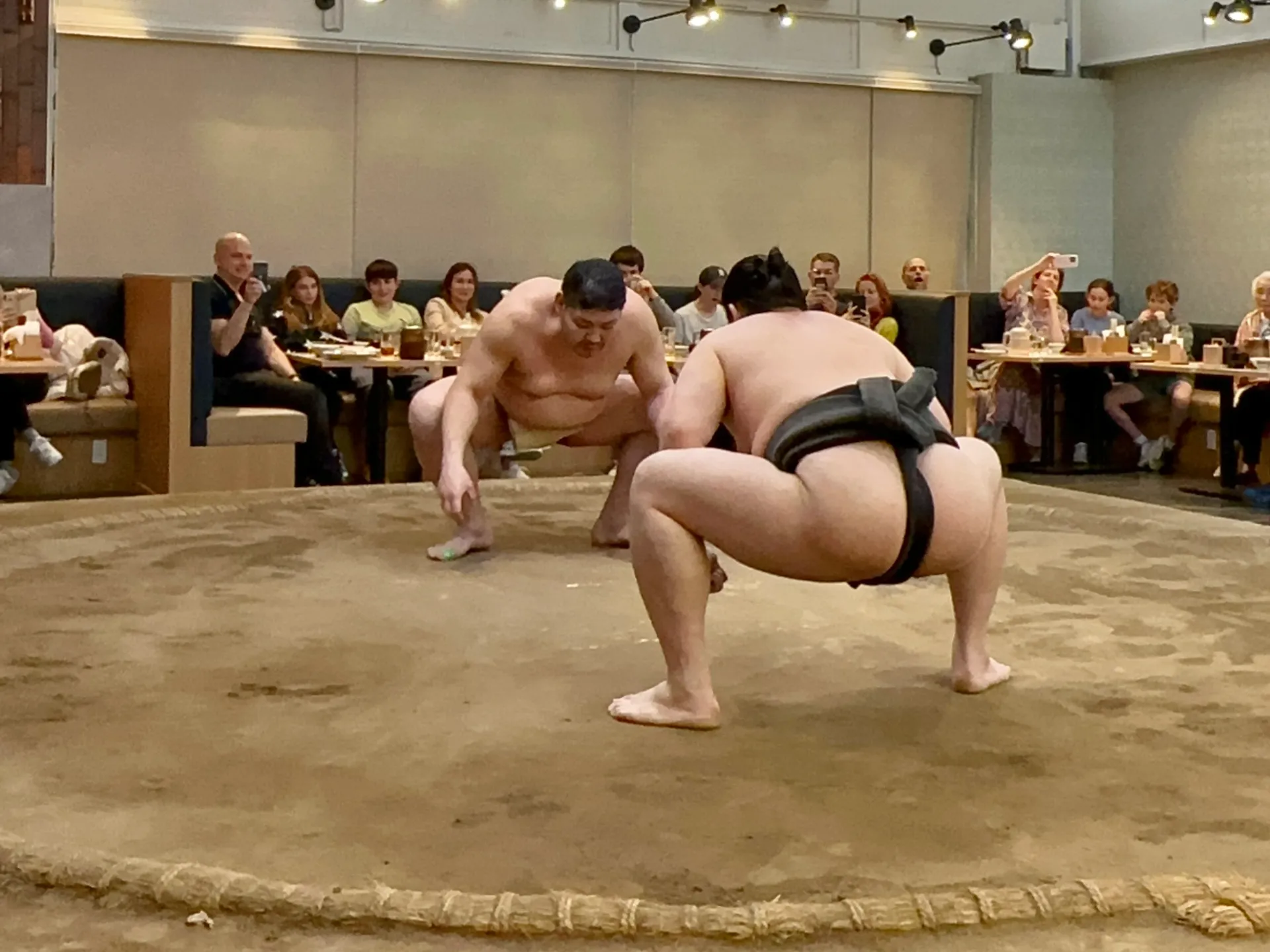
Sumo events — even casual dinner shows — carry cultural expectations. Follow these norms and you'll earn genuine respect from Japanese hosts:
Yes. Grand Tournaments run in January, May, and September. Outside these months, sumo shows, morning practice visits, and restaurant experiences operate year-round. In fact, off-tournament months are often the best time to visit stables, as training schedules are more predictable.
Most dinner shows (Yokozuna Tonkatsu, Asakusa Sumo Club) welcome families and have child-friendly menus. Morning practice tours typically recommend ages 12+ due to the early start time and strict silence requirements. Tournament attendance has no age restrictions.
Not for the guided experiences listed on this site. Most tours and shows offer English commentary or bilingual guides. At tournaments, there's no commentary in any language inside the arena, but the action speaks for itself. Stadium signage is in Japanese and English.
Casual clothing is fine for all experiences. For morning practice, wear layers (stables can be cold in winter and have no air conditioning). For dinner shows, smart casual works. At tournaments, anything comfortable for sitting 4–6 hours on cushions (tatami box seats) or arena chairs.
Traditional chankonabe uses a chicken or dashi-based broth with tofu, vegetables, and various proteins (chicken, fish, pork). It's not inherently gluten-free (soy sauce contains wheat) or vegetarian. Some restaurants offer modified versions — contact the venue or your tour operator in advance to discuss dietary requirements.
For sumo shows and restaurant experiences: 1–2 weeks ahead for off-peak, 3–4 weeks during cherry blossom season (late March–April) and autumn (October–November). For morning practice: 2–3 weeks minimum. For tournament tickets: as soon as they go on sale, ideally the first day.
Here's a sample itinerary that combines multiple sumo experiences into one action-packed day. This works best on a non-tournament weekday:
This itinerary is ambitious but doable. The key is booking the morning practice first (it's the hardest to reschedule) and building the day around it. If you're not a morning person, skip the stable visit and do a lunch show + evening show combo instead — still a phenomenal sumo day.
— Editorial Team, SumoExperience.tokyoWhether you're planning months ahead or looking for something to do tomorrow, Tokyo has a sumo experience that fits. Use the links below to check availability and current pricing on our recommended platforms: