
The November Grand Sumo Tournament in Fukuoka. 15 days of professional sumo at its highest level. Here's how to get tickets and make the most of your visit.
Browse Sumo Tournament Packages ➔ⓘ Disclaimer This website is an independent guide, not affiliated with the Japan Sumo Association or Fukuoka Kokusai Center. Ticket information sourced from official and third-party platforms. Verify before purchasing.
| Tournament | Kyushu Basho (九州場所) — November Grand Sumo Tournament |
|---|---|
| Venue | Fukuoka Kokusai Center, Fukuoka City |
| Dates | 15 days in November (typically 2nd Sunday through 4th Sunday) |
| Ticket Prices* | ¥3,800 (general) to ¥14,800+ (ringside box) |
| Ticket Availability | Sells out fast — good seats within hours of release |
| Getting There | Fukuoka Kokusai Center, ~10 min from Hakata Station by bus |
*Official prices set by the Japan Sumo Association. Third-party packages may differ. Verify current prices before purchasing.
The Kyushu Basho is the sixth and final Grand Sumo Tournament (honbasho) of the year. Held every November at the Fukuoka Kokusai Center, it closes the annual sumo calendar with 15 days of competition among the sport's top athletes. All six divisions compete, from jonokuchi (rookies) in the early morning to makuuchi (top division) in the late afternoon.
For sumo fans, the Kyushu Basho holds special significance. It's the tournament that determines final yearly rankings. Wrestlers on the cusp of promotion — a sekiwake chasing ozeki rank, or an ozeki with yokozuna aspirations — fight with an intensity that can surpass even the prestigious Tokyo tournaments.
For international visitors, the Kyushu Basho is often the most accessible tournament. Fukuoka Kokusai Center is smaller than Tokyo's Kokugikan (about 8,500 seats vs. 11,098), which means closer seats to the action. Fukuoka itself is a fantastic food city — famous for tonkotsu ramen, mentaiko (spicy cod roe), and yatai (street food stalls) — making the trip worthwhile beyond sumo alone.
Understanding the seating layout is critical for getting the right tickets. Here's the hierarchy from closest to farthest:
The premium experience. You sit on cushions on the floor, approximately 2–3 meters from the ring. At this distance, you can see the wrestlers' facial expressions, hear their breathing, and potentially be hit by a wrestler thrown from the ring (it happens — there are no barriers). These sell out first and are extremely difficult to obtain through standard channels.
Small tatami boxes that seat 4 people each. Located on the first and second levels. You sit cross-legged or with legs folded. The view is excellent and you're close enough to feel the energy. Box seats come in A, B, and C tiers based on proximity to the ring.
Standard arena chairs on the upper levels. These are the most affordable advance-purchase option and still provide a clear view of the ring. The 2nd-floor chair seats offer a bird's-eye perspective that's actually excellent for understanding the strategy and footwork of each bout.
Unreserved seats sold on the day of each tournament session. Available only at the venue box office starting at 8:00 a.m. Quantity is limited (varies by venue), and people start queuing by 5–6 a.m. for popular days (opening day, final day, weekends).
The Japan Sumo Association sells tickets through its official platform and authorized Japanese ticket agencies. The process is primarily in Japanese and requires:
Platforms like GetYourGuide and Klook offer tournament ticket packages in English, often bundled with:
The trade-off: prices are higher than face value. You're paying for convenience, language support, and booking security.
For budget travelers or spontaneous visitors: show up at 6–7 a.m. on the day and queue for jiyuseki (unreserved seats). Weekday mid-tournament dates (Days 5–10) have the shortest queues. Opening day, final day, and weekends require extremely early arrival.
| Time | Division | Atmosphere |
|---|---|---|
| 8:30–10:00 | Jonokuchi, Jonidan | Quiet, meditative. Nearly empty arena. Purists love this. |
| 10:00–12:00 | Sandanme, Makushita | Arena slowly fills. Competition intensity increases. |
| 13:00–14:30 | Juryo | The "second division." Wrestlers here are already very skilled. Arena is 50–70% full. |
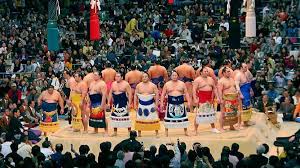
| 14:30–15:00 | Makuuchi dohyo-iri | Ring-entering ceremony for the top division. Spectacular ritual with full regalia. |
| 15:00–18:00 | Makuuchi | The main event. Arena is packed. The energy peaks for the final 3–4 bouts. |
Here's what most guides won't tell you: the best value experience is arriving at 10 a.m. with a general admission ticket. You'll watch 6+ hours of sumo including the top-division bouts, and the upper seats are comfortable enough for a full day. Bring a bento and binoculars. I've done this 4 times and don't feel I've missed anything compared to box seats — the atmosphere is what makes it.
— Editorial Team, SumoExperience.tokyo| Tournament | Month | Location | Venue |
|---|---|---|---|
| Hatsu Basho (初場所) | January | Tokyo | Ryogoku Kokugikan |
| Haru Basho (春場所) | March | Osaka | EDION Arena Osaka |
| Natsu Basho (夏場所) | May | Tokyo | Ryogoku Kokugikan |
| Nagoya Basho (名古屋場所) | July | Nagoya | Dolphins Arena |
| Aki Basho (秋場所) | September | Tokyo | Ryogoku Kokugikan |
| Kyushu Basho (九州場所) | November | Fukuoka | Fukuoka Kokusai Center |
Official ticket sales typically open in mid-September to early October for the November tournament. The Japan Sumo Association announces exact dates on its website. Third-party platforms may begin accepting bookings earlier.
Final day (senshuraku): The most dramatic, especially if the championship is undecided. Also the hardest ticket to get. Opening day: Ceremony-heavy with great atmosphere. Days 13–14: Championship contention usually crystallizes. Mid-tournament weekdays: Easiest tickets, smallest crowds, same quality sumo.
Yes. Bringing outside food is common and accepted. Many spectators bring ekiben (station bento) from Hakata Station. Beer and soft drinks are also sold inside the venue. Alcohol is permitted in the seating areas.
Absolutely. Fukuoka is consistently ranked among Japan's best food cities. Tonkotsu ramen originated here (visit Ichiran's original shop or the Ramen Stadium at Canal City). The yatai (open-air food stalls) along the Naka River are a unique night experience. Dazaifu Tenmangu shrine and Ohori Park are excellent day trips.
Yes — and you should. The Kyushu Basho is in November, outside Tokyo's tournament months (Jan, May, Sep). This means Tokyo's sumo stables are training normally, making it an ideal time for morning practice visits in Tokyo before or after your Fukuoka trip.