
Taste the fuel of champions. Chankonabe lunch with live sumo demonstrations — the tastiest way to understand sumo culture.
Book Sumo Lunch Experience ➔ⓘ Disclaimer This website is an independent guide. Prices and details sourced from third-party platforms. Verify before booking.
| Experience | Sumo restaurant lunch with live demonstrations |
|---|---|
| Price Range* | Approx. $60–$100 per person |
| Duration | ~2 hours |
| Time Slot | Primarily lunch hours (11:30 a.m.–2:00 p.m.) |
| Main Dish | Chankonabe (sumo stew) — the traditional wrestler's meal |
| Advance Booking | Yes — recommended 1–2 weeks ahead |
| Location | Various venues in Tokyo (Ryogoku area most common) |
*Prices sourced from GetYourGuide as of 2026.
There's a saying in the sumo world: "You eat to fight, you fight to eat." It captures the symbiotic relationship between sumo and food. A wrestler's daily routine revolves around two things: grueling morning practice on an empty stomach, followed by an enormous communal meal. The meal isn't optional — it's part of the training. Without the calories, the body can't sustain the weight and muscle needed to compete.
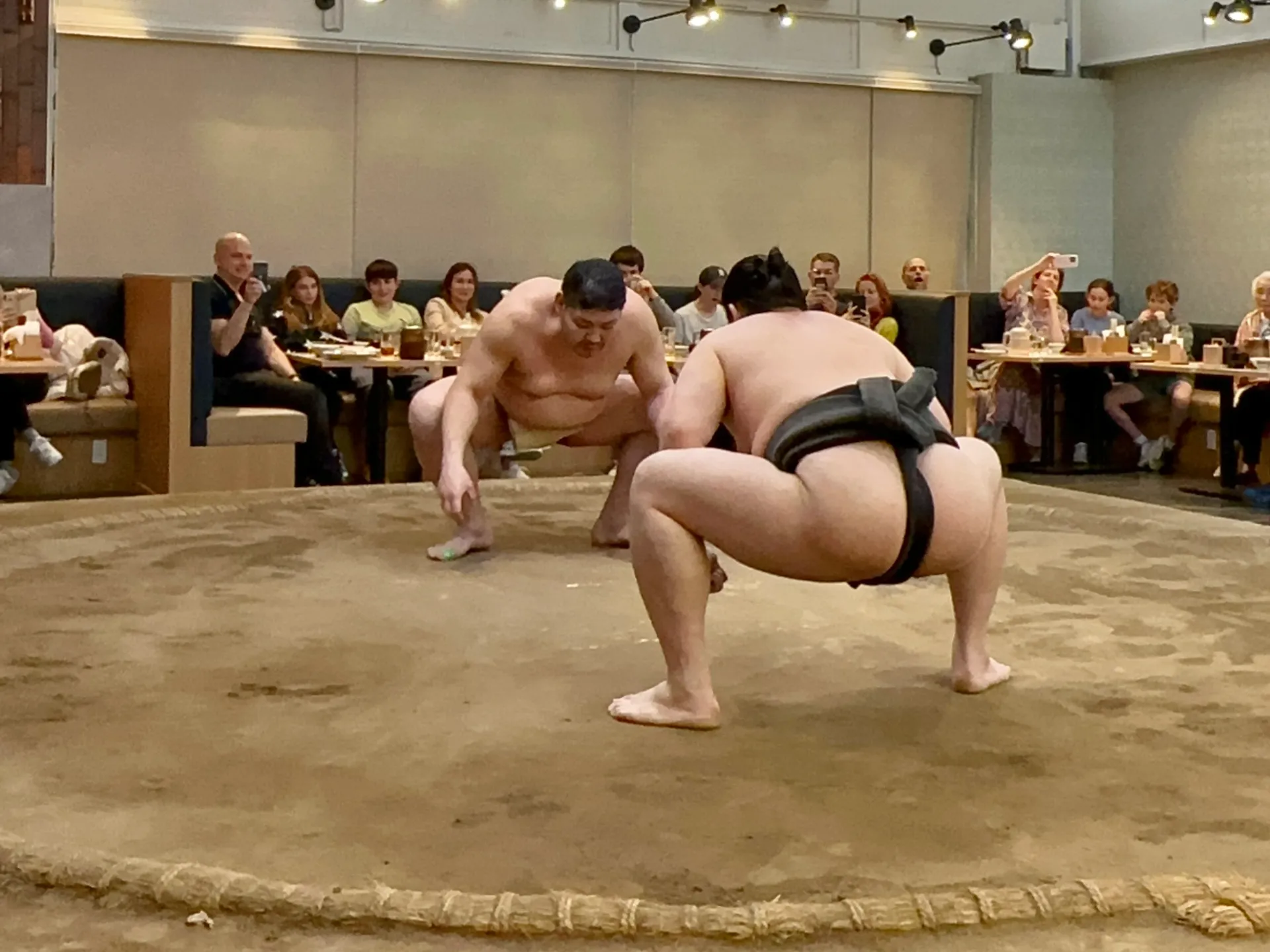
A sumo restaurant lunch experience lets you step into this cycle. You'll eat the same food wrestlers eat, prepared in the traditional style, while watching demonstration bouts that show exactly what those calories are fueling. It's dinner theatre, but with 1,500 years of history behind it.
Chankonabe (ちゃんこ鍋) is not a single recipe — it's a category of communal hot pot dishes served in sumo stables. Each stable has its own variation, but the fundamentals remain consistent:
Traditionally chicken-based. The choice of chicken is not arbitrary — in sumo, a wrestler loses when any body part other than the soles of their feet touches the ground. A chicken always stands on two feet. This superstition has persisted for generations. Some stables use dashi (kelp and bonito) or miso-based broths instead, but chicken remains the most traditional.
After eating the proteins and vegetables, udon noodles or rice are added to the remaining broth. The concentrated flavors turn this final course into a rich, almost porridge-like dish called shime (the "closer"). Many repeat visitors consider this the best part of the entire meal.
The calorie density of chankonabe is deceptive. A single serving seems reasonable, but wrestlers eat 3–5 bowls followed by several bowls of rice, washed down with beer. A top-division wrestler's lunch can exceed 4,000 calories in a single sitting. When you eat one bowl and feel full, remember: a yokozuna would be reaching for his third.
— Editorial Team, SumoExperience.tokyoEating chankonabe in a regular restaurant is pleasant. Eating it while watching two wrestlers collide 3 meters from your table transforms it into an experience. Here's what the demonstration component typically includes:
| Feature | Standard Lunch | Premium Lunch |
|---|---|---|
| Chankonabe meal | ✓ | ✓ (premium ingredients) |
| Live sumo demonstration | ✓ | ✓ |
| Drinks included | ✗ | ✓ |
| Audience participation | Varies | ✓ |
| Sumo history talk | Brief | ✓ Extended |
| Photo with wrestlers | ✓ | ✓ Priority |
Package details sourced from third-party platforms. Verify current inclusions.
If food photography matters to you (and chankonabe photographs beautifully with its colorful ingredients and steaming broth), book a table near natural window light. Early lunch seatings (11:30 a.m.) typically have the best lighting in venues with windows. The steam rising from the pot against natural backlight creates stunning photos.
If you want chankonabe without the show component (or in addition to it), Ryogoku has excellent options. These are standalone restaurants, typically run by retired wrestlers:
If you fall in love with chankonabe (and you will), here's a simplified version you can recreate at home:
Traditional chankonabe is not spicy. It's a mild, savory broth. Some modern variations offer a kimchi or miso-based spicy option, but the classic version is family-friendly.
Portions at sumo restaurants are generous — that's the point. Expect enough food for most adults to feel very full. Wrestlers eat 3–5 times what a tourist portion is. Come hungry.
Yes. Ryogoku has several standalone chankonabe restaurants (Chanko Kawasaki, Yoshiba, Chanko Tomoegata) that serve the stew without an entertainment component. These are generally cheaper and more flexible with reservations.
Traditional chankonabe is meat-based. Contact the venue in advance for vegetarian modifications. Some restaurants can prepare a vegetable-only version with kombu dashi broth, but this is not standard.